Mastering Urban Architecture Photography
Capture the towering beauty of modern glass skyscrapers and geometric structures with these essential tips.
Urban architecture photography is an incredibly challenging yet deeply rewarding genre. It requires a keen eye for geometry, a deep understanding of perspective, and the patience to wait for the perfect interplay of light and shadow across concrete and glass. A great architectural photograph does more than just document a building; it captures the essence, rhythm, and structural ambition of an entire city.
The foundation of strong architectural photography is understanding perspective and distortion. When you tilt your camera upward to fit a tall skyscraper into your frame, the vertical lines of the building will appear to converge or lean backward—an optical phenomenon known as keystoning. While this can sometimes be used as an intentional artistic effect to emphasize towering height, professional architectural images typically require perfectly straight, parallel vertical lines.
To achieve this in-camera, professionals use specialized Tilt-Shift lenses, which physically shift the optics parallel to the image sensor, allowing you to capture the entire building without tilting the camera body. If a Tilt-Shift lens is outside your budget, ensure you shoot a slightly wider frame than necessary and use the perspective correction tools (like the Guided Upright tool in Adobe Lightroom) during post-processing to manually straighten the converging lines.
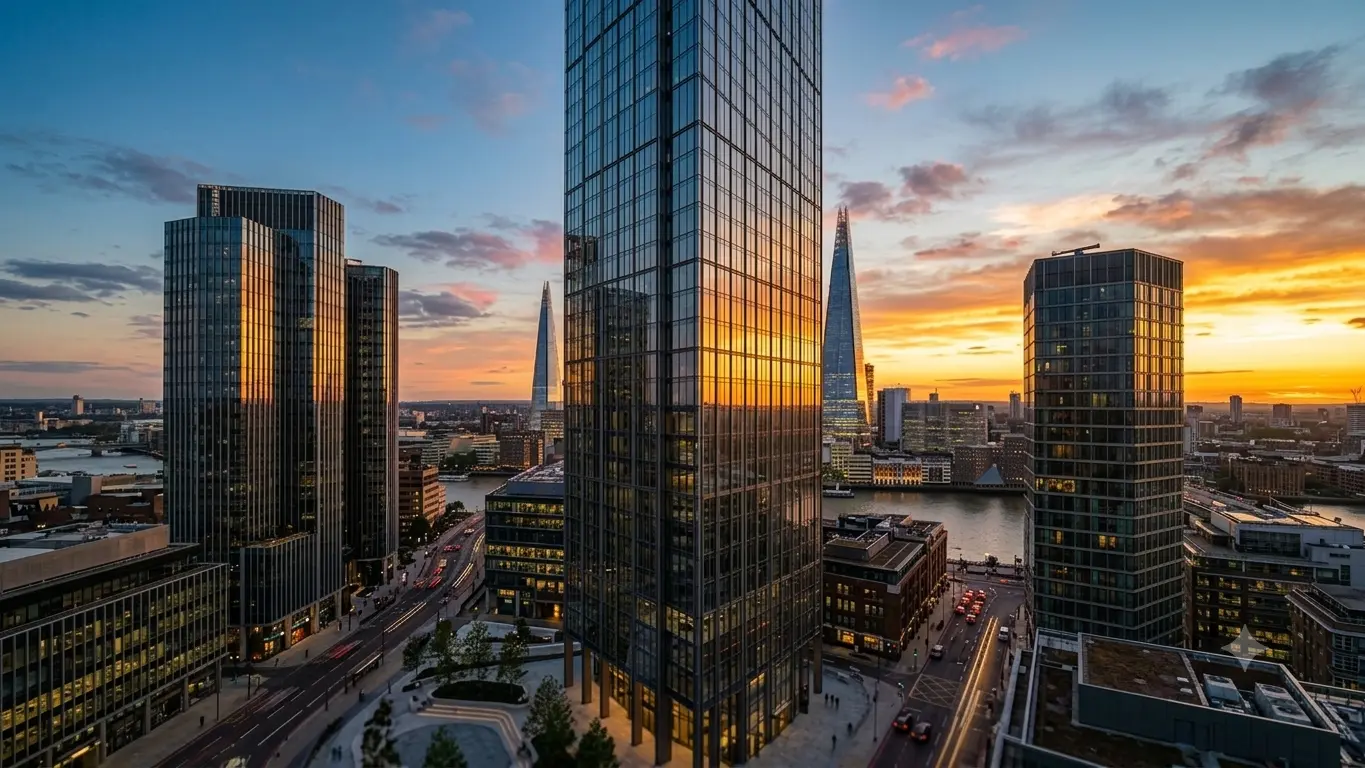
Lighting in urban environments is constantly shifting. The "Golden Hour" (shortly after sunrise and just before sunset) provides a warm, directional light that beautifully accentuates the texture of brickwork, concrete, and steel. Alternatively, the "Blue Hour" (the twilight period just after the sun has set) is arguably the best time for capturing modern, glass-clad skyscrapers. During this brief window, the deep, moody blue of the ambient sky perfectly balances with the warm, artificial tungsten lights turning on inside the office buildings, creating a striking color contrast.
Leading lines and symmetry are your best friends in an urban jungle. Look for natural geometric patterns, archways, staircases, and street markings that draw the viewer's eye directly toward your main subject. Placing your camera dead center in a perfectly symmetrical environment (such as the vaulted ceiling of a subway station or the grand interior of a public library) can create a powerful, hypnotic composition.
Finally, don't forget the human element. While architecture is about buildings, including a small, strategically placed human figure (often referred to as a "scale figure") instantly provides the viewer with a sense of the immense scale and grand proportions of the structure. A solitary person walking past a massive concrete brutalist wall emphasizes the sheer size and imposing nature of the architecture far better than the building standing entirely alone.
📦 Download the Designer Asset Pack
Enjoyed the resources in this article? Enter your email to unlock my private vault of free premium UI templates, custom vector assets, and typography configurations delivered straight to your inbox.
Continue Reading

Best 5 high-quality christmas photos - 1
Today's free resource is a set of 5 high-quality free Christmas photos for your creative projects.

Best 5 high-quality free food photos - 1
Today's free resource is a set of 5 high-quality free food photos for your creative projects.

Best 5 high-quality free food photos - 2
Today's free resource is a set of 5 high-quality free food photos for your creative projects.